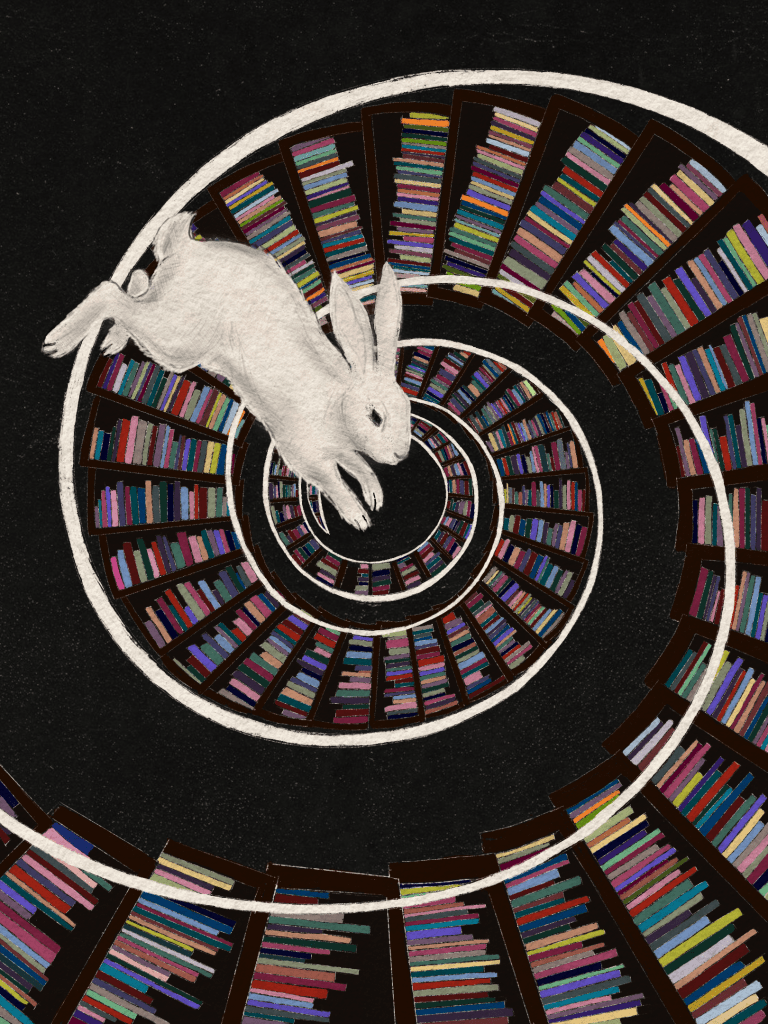
We all know the stories. We’ve grown up with the image of Tarzan, the “Lord of the Jungle”, swinging through the treetops after apes raised him. We marvel at the legend of Romulus and Remus, the twin founders of Rome, who were said to have been suckled by a she-wolf. These tales paint a romantic picture of the feral child as someone who retains a core of heroic humanity despite an animal upbringing.
The reality of the feral child is far darker and more reaching. The existence of these children offers a sobering look at what it actually takes for us to define ourselves as human.
The idea of the noble savage has long haunted our culture. We imagine a child raised by wolves as a creature of pure, unadulterated essence; vibrant, strong, and free. Nature, in these narratives, provides a sanctuary from the corrupting influence of civilization. However, the clinical record tells a different story. The history of social isolation carves a jagged line between these literary myths and a profound biological tragedy.
Take Dina Sanichar, discovered in 1867 in the jungles of Uttar Pradesh and widely considered the real-life inspiration for Mowgli. Unlike his fictional counterpart, Sanichar possessed the trauma of the wild. He preferred raw meat and the company of wolves. He arrived in civilization as a biological enigma rather than a hero.
The study of social isolation shows us that humanity is a fragile social construct instead of a biological guarantee. Anthropologists call the process by which we acquire language, upright posture, cognitive complexity, and social empathy “enculturation.” Without it, a human being runs on a different operating system entirely. When Victor of Aveyron was captured in the early 1800s, he showed no recognition of his own species and felt no discomfort in freezing temperatures. To the observers of his time, children like him blurred the boundary between the human animal and the non-human world.
The cases of feral children documented through history form a stark record of what isolation does to a human being. Wild Peter, discovered in the German countryside in 1724, walked on all fours and made no attempt at language.
Then there is Genie, found in California in 1970. Genie was not raised by animals; instead, her father imprisoned her and strapped her to a child’s toilet in a darkened room for the first thirteen years of her life. When authorities discovered her, her mental capacity measured at that of a thirteen-month-old. And despite intensive therapy, she never mastered grammar. The Leopard Boy of India, found in 1912, had toes bent at right angles from years of running on all fours. Sanichar himself could run on four limbs as fast as a grown man could run upright. His teeth had sharpened and worn down from years of chewing bones.
A common thread connects these cases: the body and mind adapt to the environment they receive. When denied a human world, the human form reshapes itself toward survival. Palms, knees, and toe-pads develop thick callouses that function like natural soles. The voice abandons language and settles into grunts, growls, howls, or bird-like chirps. Grammar remains permanently out of reach. Neurologists call this the Critical Period Hypothesis: there is a window in early childhood during which the brain can acquire language, and once that window closes, it may never reopen. Many of these children, when human support systems eventually collapsed around them, retreated back into total silence.
There is a devastating irony buried in this data. Children abandoned to the wild often managed better than those trapped with neglectful human caregivers. Authorities found Danielle Crockett in a filthy Florida home in 2005; emaciated and covered in sores, she suffered as a victim of her own family rather than the forest. The wild offered a functional bond that certain human parents withheld. Some children, in other words, found more care from animals than from their own species.
What separates us from those animals, then? What makes us human rather than merely biological? The feral child answers that question with uncomfortable clarity. Our DNA does not encode humanity. It does not arrive automatically at birth. It emerges through language, through touch, and through the slow accumulation of shared meaning passed between people. Upright posture, grammar, and a sense of self are things we teach each other.
Victor of Aveyron lived with human society until his death at around age forty, never fully crossing back into the human world. His teacher, Jean-Marc Itard, named him Victor because of the boy’s particular affinity for the sound of the vowel “o.” It was a tiny anchor, a fragile thread connecting him to language. It was not enough to bring him all the way back, but it was something.
History has documented only around one hundred cases of feral children. That number is small, and the documentation itself is often problematic. Many accounts turn out to be fictional or fabricated, lacking sufficient proof of how these children were actually cared for by animals. Despite these limitations, what these cases reveal is enormous. They show us that generations pass down our identity as a gift through the warmth of connection, instead of a birthright.
So, this leaves me with one question: What remains of our “humanity” when the human experience is stripped away?
This article definitely leans into the darker side of humanity and developmental psychology. It is a tough subject matter, but if you’re interested in exploring further, here are some sources that dig even deeper into the lives of feral children.
The Feral Child: Blurring the Boundary between the Human and the Animal – Caitlin Schwarz
From The ‘Real-Life Mowgli’ To The ‘Human Pet,’ Learn The Bizarre Stories Of 9 Feral Children From History – Marco Margaritoff
The True Story Of Genie Wiley: The Feral Child Kept In Isolation For 13 Years – Armchair Investigator
Abandoned toddler rescued and raised by feral dogs – 60 Minutes Australia


Leave a Reply